
This article is part of a series exploring things that are widely taken for granted in Japan, but remain little known elsewhere.
I think My Little Lover’s “Hello, Again ~Mukashi kara aru basho~” is a song that most Japanese people know. In Japan, it’s often considered one of those quiet classics from the 1990s that crossed generations. Even if you’re from a slightly different age group, you’ve probably heard it at least once somewhere. Still, there seem to be surprisingly few people who can clearly explain why this song has been loved for so long.
The subtitle “Mukashi kara aru basho” literally means “a place that has existed for a long time.” It doesn’t refer to a specific location, but rather to a vague, emotional space—something familiar, enduring, and hard to put into words. This ambiguity is important, because the song itself never fixes its emotions or story to one clear answer.
Personally, I think I first listened to this song “with real awareness” when I was in junior high school. When it was originally released, I wasn’t at an age where I actively followed music. But in Japan during the late 1990s and early 2000s, television played a central role in how music spread. There were many TV programs that repeatedly featured past hit songs and weekly rankings, so even without seeking them out, songs naturally became part of everyday life. This song must have been played many times in that context.
I don’t remember buying the CD, and I don’t recall borrowing it either. It wasn’t something I had saved on an MD (MiniDisc, a personal music format that was especially popular in Japan at the time). And yet, before I knew it, I had come to like it.
How was this song received?

“Hello, Again ~Mukashi kara aru basho~” is My Little Lover’s third single, released in August 1995. The lyrics and production were handled by Takeshi Kobayashi, with composition jointly credited to Kenji Fujii and Kobayashi. It topped the Oricon weekly chart—the main music ranking in Japan, comparable to Billboard in the U.S.—for two consecutive weeks, and reached total sales of around 1.85 million copies. It stands as one of the defining J-pop hits of the 1990s, and it also won the Arrangement Award at the Japan Record Awards.
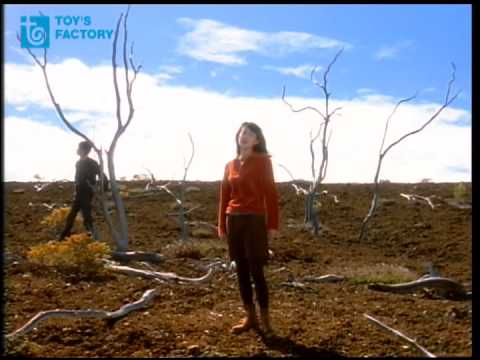
And even now, it is still very much alive. The official music video was released on YouTube in 2019, and as of 2026 it has accumulated around 50 million views. On Billboard JAPAN’s streaming charts, it has surpassed 100 million total streams. Despite the long time that has passed since its release, the numbers haven’t become a mere “relic of the past.”
This isn’t a song meant to be carefully put away

I don’t think this song is meant to be carefully stored away. Rather, it’s the kind of song you forget about for a while, then suddenly remember one day, and for some reason feel an urge to listen to.
When you play it again after a long time, before you even think “how nostalgic,” you find yourself thinking, “It really is good.” And somehow, it feels fresh every time. It wasn’t tied to any decisive moment in my life, and I don’t remember listening to it repeatedly. And yet, it never seems to wear out or become just another memory.
Why does it feel freshly lovable every time?

Perhaps this song was made in a way that avoids fixing emotions too firmly in place. It never clearly states the reason for the separation, nor does it present a clear conclusion. Because listeners aren’t told exactly what to feel, the song never settles into a single interpretation. Each time you listen, it quietly returns to the present.
When I listen to it, no specific place or episode comes to mind. Still, it feels like there is a space inside me where this song simply belongs. Less a memory, and more a place where a certain feeling rests. That may be why, even without listening to it often, I can still hum it.
The 1990s idea of “sharing without owning”

When this song was released, the internet was not yet deeply embedded in everyday life. Television was the dominant medium, and music wasn’t something you actively searched for. It entered your life on its own. “Hello, Again” spread in exactly that way. Many people knew it without owning the CD or having it in a personal collection.
This was a form of shared experience without ownership. The song belonged less to individuals and more to the atmosphere of daily life. And yet, people genuinely came to like it.
Conclusion: a song that stays with you without a clear reason

It’s okay if you can’t fully explain why you love a song. In fact, the fact that this song has continued to be shared without a clear explanation may itself be the answer. There’s no need to put it away, yet it never disappears. Even when you think you’ve forgotten it, it quietly comes back.
So, how does this song sound to you? What did you feel when you listened to it? Do you think you understand why it has stayed with so many people for so long? If it made you want to listen again—or made you want to talk about how it felt—then perhaps that’s already enough.
In this section of the blog, I’ll be introducing things that are so taken for granted in Japan that they’re rarely explained, but might feel fresh to people elsewhere in the world. As the first song, “Hello, Again ~Mukashi kara aru basho~” feels like the perfect place to begin.


Comment